
In Russia and many Eastern European cultures, the end of winter is not something that arrives quietly. It is welcomed with laughter, warm food, music, and joyful outdoor gatherings. One of the most beloved traditions marking this seasonal shift is Maslenitsa, a vibrant festival that celebrates the coming of spring.
For generations, Maslenitsa has been a time when families and communities gather to enjoy comforting foods, outdoor festivities, and meaningful traditions. It is a celebration full of symbolism, storytelling, and hospitality,values that are deeply connected to Russian culture and cuisine.
What Is Maslenitsa?
Maslenitsa is a traditional Russian festival that takes place during the final week before the start of Lent in the Orthodox Christian calendar. Historically, the celebration blends both ancient pagan traditions and later Christian customs, creating a festival that reflects centuries of cultural history.
The holiday is often described as Russia’s version of Mardi Gras, but with its own distinctive traditions and flavors. During Maslenitsa week, people gather to eat rich foods, enjoy winter activities, and celebrate the approaching arrival of warmer days.
While today’s festival is widely associated with Orthodox Christian traditions, its origins actually go back much further.
Long before Christianity spread through Russia, early Slavic communities celebrated the end of winter with festivals honoring the sun. These gatherings recognized the gradual return of warmth and light after the long, cold months.
Fire and sunlight played important symbolic roles in these early traditions. Bonfires were lit to represent the sun’s strength and the hope of spring. Communities gathered outdoors to sing, dance, and share food while welcoming the changing season.
Over time, as Christianity became more established in the region, Maslenitsa became connected to the calendar leading up to Lent. The festival kept many of its joyful traditions while also marking a time of preparation before a more reflective period in the church year.
The result is a celebration that blends history, culture, and community.
Why Blini Are the Heart of Maslenitsa
If there is one food that perfectly represents Maslenitsa, it is blini.
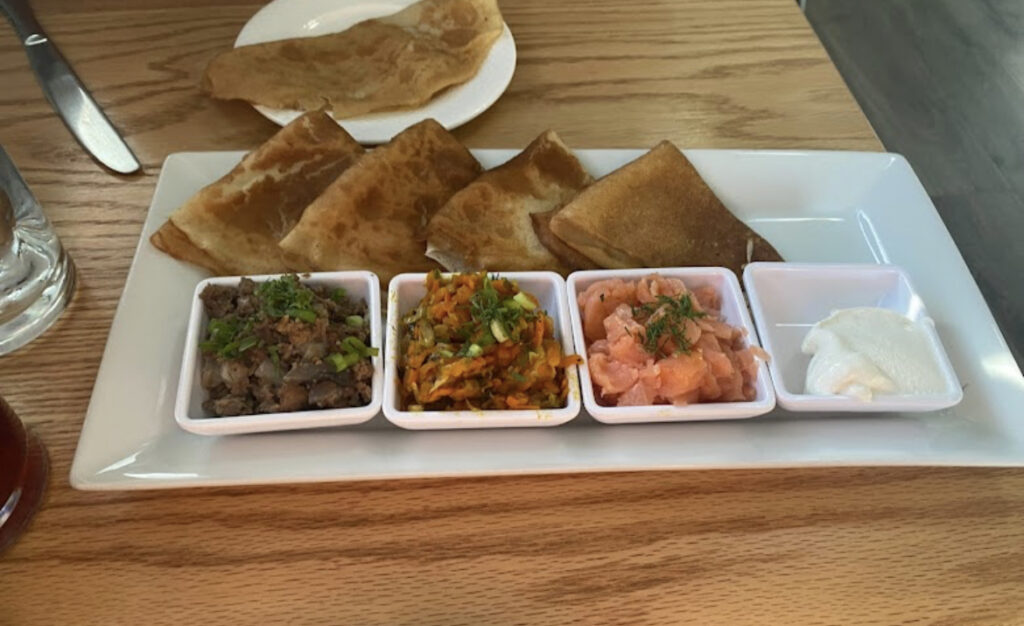
Blini are thin, delicate Russian crepes that have been enjoyed for centuries. During Maslenitsa, they appear on tables everywhere, from family kitchens to festive gatherings in town squares.
The reason is both practical and symbolic.
Blini are round and golden, resembling the sun. In the context of Maslenitsa, they represent warmth, light, and the promise of spring returning after winter’s long darkness.
Families prepare stacks of blini throughout the week and serve them with a variety of toppings. Some are savory, filled with meats or vegetables. Others are sweet, paired with honey, jam, or fruit.
At Alyonka Russian Cuisine, blini are a favorite menu item and a wonderful introduction to Russian culinary traditions. Guests can explore these delicate crepes as part of the restaurant’s selection of appetizers and traditional dishes, which you can learn more about in our guide to Russian and European food culture.
Sharing blini with family and friends is one of the most joyful parts of Maslenitsa.
A Week of Celebration and a Symbolic Farewell to Winter
Maslenitsa is not a one-day holiday. It is celebrated over the course of an entire week, with each day traditionally connected to different activities and gatherings.
During this time, communities often host festivals that include:
- Outdoor games and sledding
- Folk music and dancing
- Winter fairs and markets
- Bonfires and storytelling
- Large shared meals
These events bring people together in a spirit of warmth and hospitality, even while snow may still be on the ground.
Sledding is especially popular during the festival. In many communities, families head outside to enjoy the final weeks of winter weather before spring begins to arrive. Bonfires are another important part of the celebration. Fire represents the returning power of the sun and the symbolic farewell to the cold season.
Perhaps the most dramatic moment of Maslenitsa comes at the end of the week.
In many traditional celebrations, communities gather to burn an effigy representing winter. This act symbolizes letting go of the cold season and welcoming the renewal of spring. The moment is both festive and meaningful. People sing, dance, and share food while watching the flames, celebrating the idea that brighter, warmer days are just around the corner. While modern celebrations vary widely from place to place, this symbolic farewell remains one of the most recognizable traditions of Maslenitsa.
At its heart, Maslenitsa is about bringing people together.
Russian culture places a strong emphasis on hospitality, and food plays an important role in expressing that generosity. Preparing meals, sharing dishes, and inviting guests into your home are ways of showing care and connection.
That same spirit is something many guests notice when they visit Alyonka Russian Cuisine. Chef and owner Elena DeYoung has built the restaurant around the idea that food should be both comforting and meaningful.
As Elena often says, the joy of cooking comes from sharing it with others.
Experiencing the Spirit of Maslenitsa
For many diners in the Treasure Valley, Russian cuisine is something new and exciting to explore. Dishes like pelmeni, borscht, and blini introduce guests to flavors that have been enjoyed across Eastern Europe for generations. Here at Alyonka Russian Cuisine, our customers love the authentic culture they experience!
“Restaurants like Alyonka play an important role in keeping these traditions alive while also sharing them with new audiences. This place is easily one of the best restaurants in Boise. The staff is very friendly and the space is intimate and tasteful. The food is outstanding without being overly reliant on salt or oil. The natural flavors of the ingredients are brought out in each dish and are complimented well by the generous dill and green onion garnish.Definitely get the cabbage rolls if they are available! The tomato sauce it comes with is incredible with the rice.” – Jared L.
If you are curious about the cultural traditions behind Russian cuisine, Maslenitsa offers a wonderful glimpse into the history, symbolism, and joy that surround many of these foods.
Even if you are not celebrating the festival itself, you can still enjoy the spirit of Maslenitsa by gathering with friends and family over warm, comforting food.
A stack of freshly made blini, a warm bowl of soup, or a shared meal around the table all reflect the same values that have shaped Russian celebrations for centuries.
And if you happen to find yourself exploring Boise’s diverse food scene, the city is home to many cultural experiences from around the world. In fact, you can discover a variety of international flavors in the region through guides like Around the World in Boise, which highlight the many global cuisines available in the area.
Maslenitsa reminds us that even in the coldest seasons, warmth can be found in community, hospitality, and good food.
As winter fades and spring approaches, the message of the festival is simple and joyful: gather together, share a meal, and welcome the light returning.