
At first glance, Shuba salad looks almost too beautiful to eat, but beneath its colorful layers is a dish rooted in tradition, celebration, and generations of shared meals. Known for its striking appearance and rich, comforting flavors, Shuba is more than just a salad; it’s a celebration dish with a story rooted in tradition, culture, and shared meals.
For those exploring Russian food for the first time, Shuba offers a perfect introduction to the flavors and textures that define Eastern European cuisine. At Alyonka Russian Cuisine, it’s a dish that often sparks curiosity and quickly becomes a favorite.
What Is Shuba Salad?
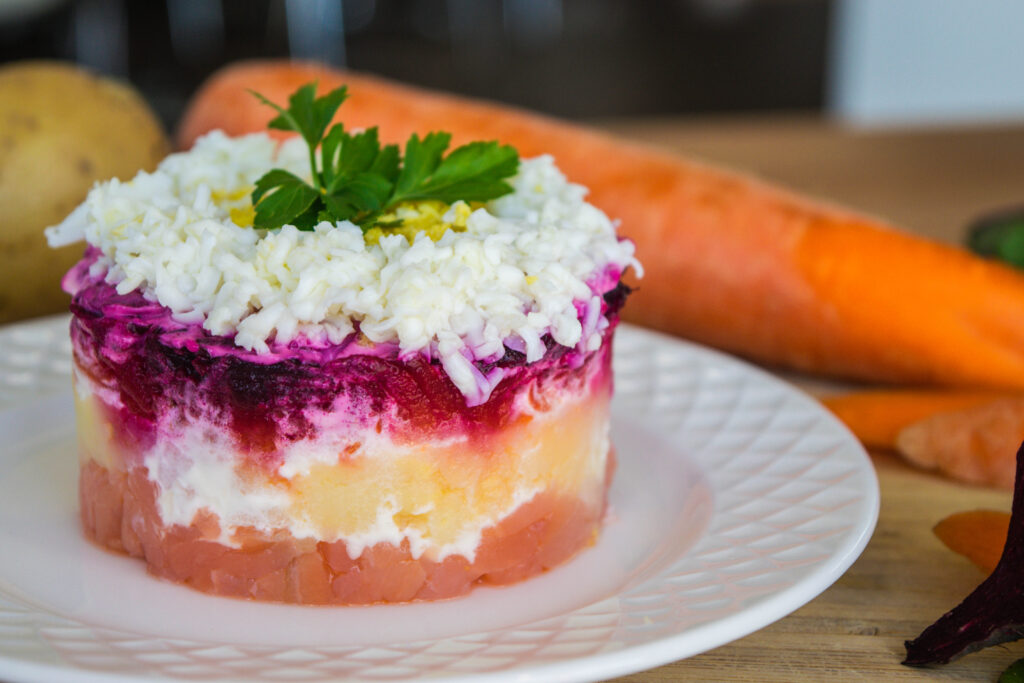
Shuba, or “Herring Under a Fur Coat,” is a traditional Russian layered salad made with a combination of simple, hearty ingredients. The classic version includes pickled herring, boiled potatoes, carrots, beets, eggs and mayonnaise.
Each ingredient is layered carefully to create a dish that is as visually appealing as it is flavorful. The final layer of grated beets gives Shuba its signature deep purple color, making it stand out on any table.
The name may sound unusual at first, but it reflects the way the ingredients are layered like a “fur coat” covering the fish underneath.
Shuba became especially popular during the Soviet era, when home cooks relied on affordable, accessible ingredients to create filling and satisfying meals. Over time, it became a staple at holiday gatherings, celebrations, and family dinners.
Today, it remains a dish strongly associated with New Year’s celebrations and special occasions, where it is often served alongside other traditional favorites.
But Shuba’s appeal goes beyond nostalgia. Its combination of flavors of salty, sweet, creamy, and earthy creates a balanced and memorable dish that continues to resonate with modern diners.
At the heart of Shuba Salad is herring, a fish that has long been a staple in Northern and Eastern European diets.
Traditionally, the herring used in Shuba Salad is pickled, which gives it a slightly tangy, salty flavor. This pairs beautifully with the sweetness of the beets and carrots, as well as the creaminess of the mayonnaise.
In some variations, you may also find smoked fish used instead, offering a slightly different depth of flavor. That’s the version that we serve at Alyonka Russian Cuisine! Regardless of the variation, the fish provides the foundation that ties the entire dish together.
Why the Layers Matter
One of the most distinctive aspects of Shuba Salad is its layered structure.
Each layer serves a purpose:
- Potatoes add heartiness
- Carrots bring subtle sweetness
- Eggs contribute richness
- Beets provide both color and earthy flavor
When combined, these layers create a dish that evolves with every bite. You experience different textures and flavors as you move through the salad, making it both comforting and interesting.
This careful layering is what makes Shuba feel both comforting and distinctive.
How Shuba Salad Is Traditionally Served
Shuba is typically served cold, allowing the layers to set and the flavors to meld together. It is often prepared ahead of time, making it a convenient dish for gatherings and celebrations.
In Russian homes, it is usually presented in a large dish and shared among family and guests. The vibrant color and clean layers make it a centerpiece on the table. It is commonly enjoyed with fresh bread, pickles or other small dishes or salads. The result is a meal that feels both abundant and welcoming.
Like many traditional dishes, Shuba is closely tied to the idea of hospitality.
Preparing it takes time and care, from boiling the vegetables to carefully assembling each layer. This process reflects a deeper cultural value: food is not just about nourishment, but about bringing people together.
That same philosophy is at the heart of Alyonka Russian Cuisine. As one guest shared:
“The natural flavors of the ingredients are brought out in each dish.” – Jared L.
This focus on simple ingredients prepared with intention is what makes traditional dishes like Shuba so special.
Variations Across Regions
While the classic version of Shuba is widely recognized, there are many variations depending on region and personal preference.
Some common adaptations include:
- Using smoked salmon instead of herring
- Adding apples for extra sweetness
- Adjusting the thickness of layers
- Changing the order of ingredients
These variations reflect the flexibility of the dish and the creativity of home cooks across different regions. No matter the version, the essence of Shuba remains the same: layered flavors, vibrant color, and a sense of tradition.
Trying Shuba in Boise
For those curious about experiencing Shuba without making it at home, Alyonka Russian Cuisine offers an authentic take on this classic dish.
If you’re exploring the menu or planning your visit, you can learn more about the restaurant’s offerings and what makes it a go-to spot for Russian food in Boise..
And if you’re ready to try Shuba for yourself, you can easily place an order through Alyonka’s online ordering page, where a variety of traditional dishes are available for takeout or catering.
For many first-time diners, Shuba becomes a memorable introduction to Russian cuisine both visually and in flavor.
A Celebration of Flavor and Tradition
Shuba salad is more than just a recipe. It’s a reflection of history, culture, and the joy of sharing food with others.
From its origins as a practical, resourceful dish to its place on modern celebration tables, it continues to bring people together through its unique combination of flavors and textures.
Whether you’re discovering it for the first time or revisiting a familiar favorite, Shuba offers a glimpse into the richness of Russian culinary tradition.
And like many traditional dishes, its true meaning is found not just in the ingredients, but in the experience of sharing it with others.