
Russian and Ukrainian food share borders, history, and a lot of the same dishes. Ask a cook on either side who made a dish first and you’ll get a quick, firm answer.
They are not the same cuisine, though. The differences are easy to miss on a first bite and meaningful enough to tell you a lot about both cultures.
Where the two cuisines overlap
For most of the twentieth century, both countries cooked under one flag. Soviet policy folded regional dishes into a shared national menu, which is how Uzbek plov, Caucasus shashlik, and borscht ended up on tables across the union.
That standardization blurred lines that were once clearer. Plenty of families on both sides still cook the same soups, dumplings, and salads, and they rarely agree on whose version is right.
How Ukrainian cooking tends to differ
Ukrainian cooking tends to be more wheat-based, uses more pork, and leans toward fresh cabbage. It also relies heavily on beets and fresh herbs, and its dumplings are as likely to be sweet as savory.
What leans Russian
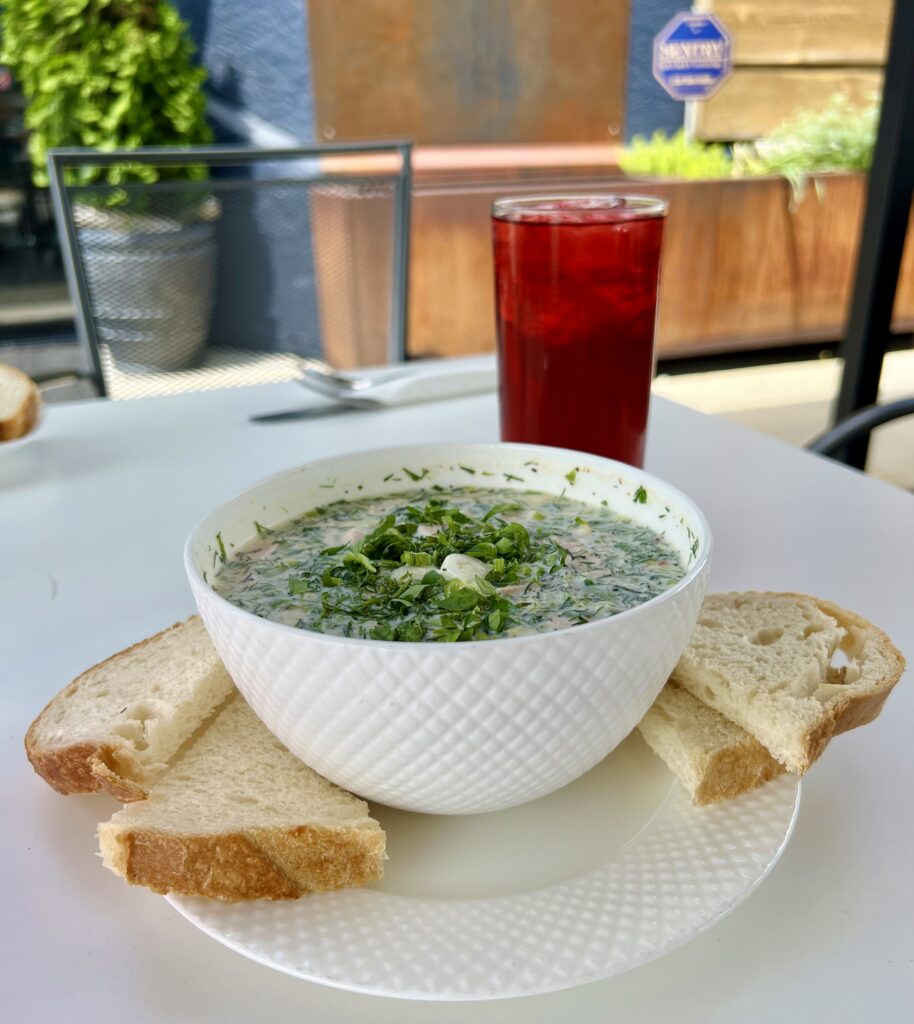
Russian cooking tends to reach for rye bread, smoked fish, buckwheat, and sour cream. Winters were long, and the pantry reflected it. Fermented, smoked, and preserved foods carry a lot of the flavor.
Okroshka, the cold summer soup built on kvass and sour cream, is a good example. That fermented tang is part of how Russian food balances richness.
Not every line is clean. Buckwheat is a staple in Ukraine too, and sour cream turns up on both tables. These are tendencies, not rules.
Borscht as a case study
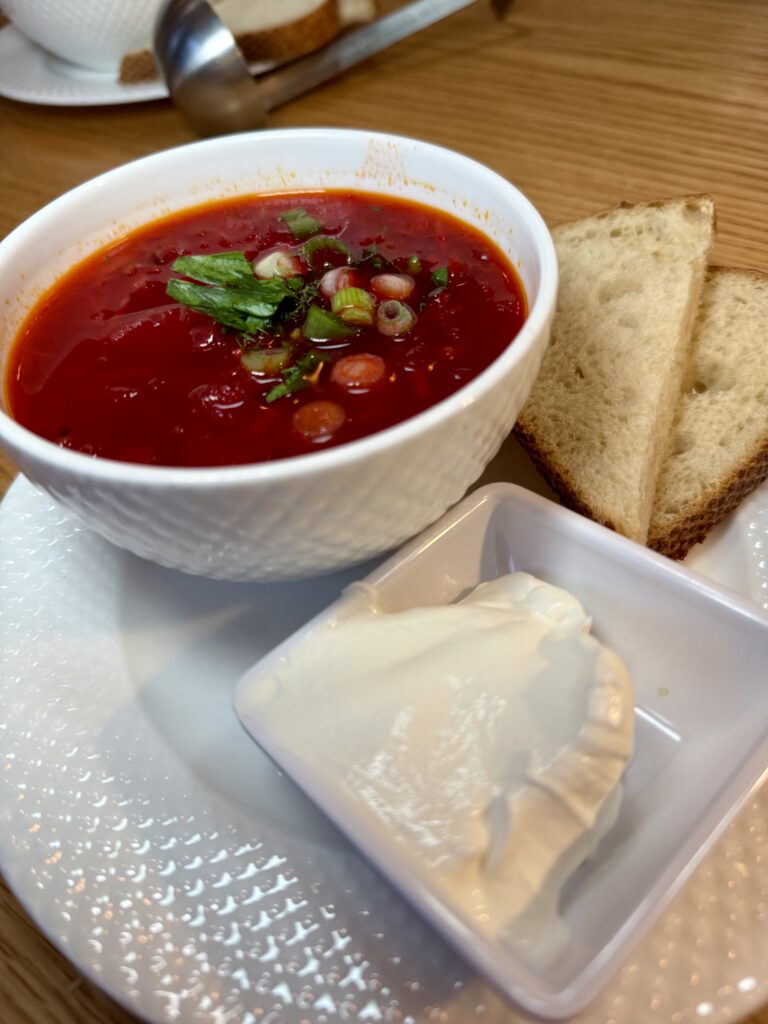
Both countries claim borscht, and both have a point. The name is shared across much of Eastern Europe, and there is no single recipe, even within one region.
Where the versions part ways is usually the broth and the finish. Russian borscht is generally built on beef broth and served with rye bread and a spoonful of sour cream. Ukrainian borscht more often starts with pork and comes with garlic rolls called pampushky.
Cooks on both sides will tell you that line is looser than it sounds. At Alyonka, borscht arrives with bread and sour cream.
Pelmeni versus vareniki
Pelmeni are the Russian dumpling, tied to Siberia and the Urals. They are small, with a very thin dough and a raw meat filling, traditionally beef, pork, or a mix, seasoned simply and served with sour cream or in broth.
Vareniki are the Ukrainian dumpling. They are larger, with a thicker dough, and the filling is usually cooked first. Potato, cottage cheese, and cherries are classic, which means vareniki can be savory or sweet. Pelmeni never are.
The easiest way to remember it: pelmeni are meat in a thin wrapper. Vareniki are a softer, wider canvas.
How Elena’s menu reflects the Russian tradition
Elena grew up in Almaty, Kazakhstan, in a neighborhood where Russian, Korean, Armenian, and Kazakh families lived side by side. The menu leans Russian at its core, and you can see it dish by dish.
Buckwheat comes alongside the beef stroganoff. Pelmeni are hand-rolled and filled with seasoned beef, the dish Guy Fieri drove to Boise to try. Borscht comes with bread and sour cream. Blini and shuba, built on smoked salmon, round out the Russian side.
Food rarely stays inside borders, and neither does this menu. Vareniki, filled with potato or mushroom and finished with fresh dill, are on it too. They show where the two traditions overlap, in the same kitchen and on the same table.
Try both the pelmeni and the vareniki on your next visit. Order them side by side and you’ll see how the two traditions compare in a few bites. Pelmeni can sell out before Friday, so earlier in the week is best.