
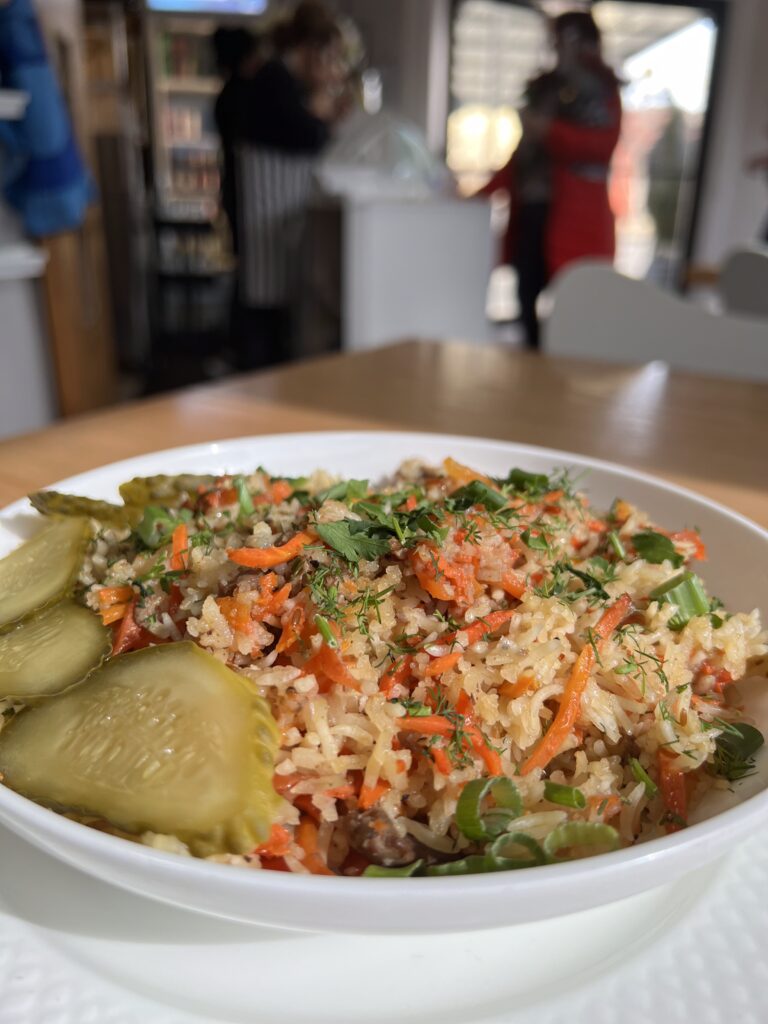
Few dishes capture the essence of Russian and Central Asian cuisine quite like Lamb Plov, a hearty rice dish that has traveled across borders and centuries, absorbing flavors and techniques along the way. Known in various regions as plov, pilaf, or plof, this dish is celebrated for its rich, savory taste and aromatic spices. At Alyonka Russian Cuisine, our Lamb Plov is a crowd favorite, famously cooked alongside Guy Fieri during his visit on Diners, Drive Ins and Dives, showcasing how traditional flavors can delight both locals and culinary celebrities alike.
What is Lamb Plov?
Lamb Plov is a rice-based dish typically made with tender lamb, aromatic spices, and slow-cooked vegetables. The rice is infused with the juices of the meat and often seasoned with onions, garlic, and a blend of spices such as cumin, coriander, and sometimes saffron. The dish is traditionally cooked in a single pot, allowing the flavors to meld together into a hearty, flavorful meal that’s perfect for family gatherings or festive occasions.
At Alyonka, our version is crafted with care, staying true to the traditions Elena learned from her family while also adding subtle touches that make it uniquely hers. The result is a dish that’s rich, savory, and comforting, a perfect example of Russian cuisine with Central Asian roots.
Preparing Lamb Plov begins with selecting the right ingredients. Tender lamb is cut into bite-sized pieces and seared to lock in flavor. Onions and carrots are then sautéed to create a base, followed by the addition of rice and spices. Some recipes call for layering the ingredients, while others mix everything together before slow-cooking.
The key to perfect plov is patience. Slow-cooking allows the rice to absorb the juices from the meat and vegetables, creating a deeply satisfying texture and taste. Garnishes like fresh herbs, pomegranate seeds, or nuts are sometimes added to enhance both flavor and presentation.
“All that sweetness comes from just the carrots?” – Guy Fieri
Regional Variations of Plov
While Lamb Plov is beloved across Russia, it’s also a staple in Central Asian countries like Uzbekistan, Tajikistan, and Kazakhstan. Each region has its own take:
- Uzbek Plov: Often includes carrots, onions, and sometimes chickpeas, cooked in lamb fat for extra richness.
- Russian Variants: May use a mix of lamb and beef or incorporate local vegetables, adjusting spices to suit regional tastes.
- Caucasus Versions: Can include barberries or dried fruits for a slightly sweet contrast to the savory base.
Despite these variations, the core of the dish, which is rice cooked with tender meat and aromatics, remains consistent, highlighting its versatility and widespread appeal.
The Silk Road and the History of Lamb Plov
The history of Lamb Plov is intertwined with the Silk Road, the ancient network of trade routes connecting Europe and Asia. As traders and travelers moved along these routes, they brought spices, grains, and culinary techniques with them. Rice, which originated in Asia, became a staple in regions as far west as Russia, and dishes like plov evolved by incorporating local ingredients and flavors.
Spices such as cumin, coriander, and saffron were introduced through trade, enriching the dish and making it a vibrant example of cultural exchange. The Silk Road didn’t just carry goods—it carried ideas, traditions, and flavors that shaped the cuisine of entire regions, leaving a legacy that lives on in every bite of Lamb Plov.
This historical connection is part of what makes Lamb Plov so fascinating: it’s not just a meal, but a culinary bridge linking cultures across continents and centuries.
Guy Fieri and Alyonka’s Lamb Plov
The dish gained extra attention when Guy Fieri cooked Lamb Plov with Elena at Alyonka Russian Cuisine. Fieri’s enthusiasm for the rich flavors and traditional preparation highlighted how timeless and universally appealing this dish truly is. Guests who have tried the plov at Alyonka often describe it as a “comforting journey through history,” combining the rustic charm of Russian home cooking with the bold, aromatic influences of Central Asia.
Why Lamb Plov Became a Staple Across Eastern Europe
The rise of Lamb Plov as a staple in Eastern Europe can be traced back to the movement of peoples, goods, and cultures along trade routes. Its simple yet flexible composition made it adaptable to local ingredients, while the aromatic spices and slow-cooked flavors appealed to a wide range of palates.
Cabbage rolls, Pelmeni dumplings, and plov all share a common heritage: they are practical, filling, and comforting, yet sophisticated enough to be featured in celebrations and special occasions. The adaptability of plov whether served at home, at festivals, or in restaurants ensures its enduring popularity.
Enjoying Lamb Plov at Alyonka or at Home
Every bite of Lamb Plov at Alyonka tells a story: of trade routes, cultural exchange, family recipes, and culinary passion. It’s a dish that connects diners to centuries of tradition while remaining vibrant and relevant today. From the Silk Road to your table, Lamb Plov demonstrates how food travels, evolves, and unites people across regions.
Whether you’re visiting Boise for the first time or you’re a regular at Alyonka, Lamb Plov offers a taste of history you can savor, combining tender lamb, aromatic rice, and a legacy that spans continents.
While Lamb Plov can be made at home, many people enjoy it as a special treat at Alyonka. When served, it’s accompanied by fresh herbs and sometimes a side of traditional Russian pickled vegetables, creating a meal that’s rich in both flavor and culture.
For those who want to try it without leaving their home, you can order Lamb Plov through TripAdvisor or DoorDash for pickup.