
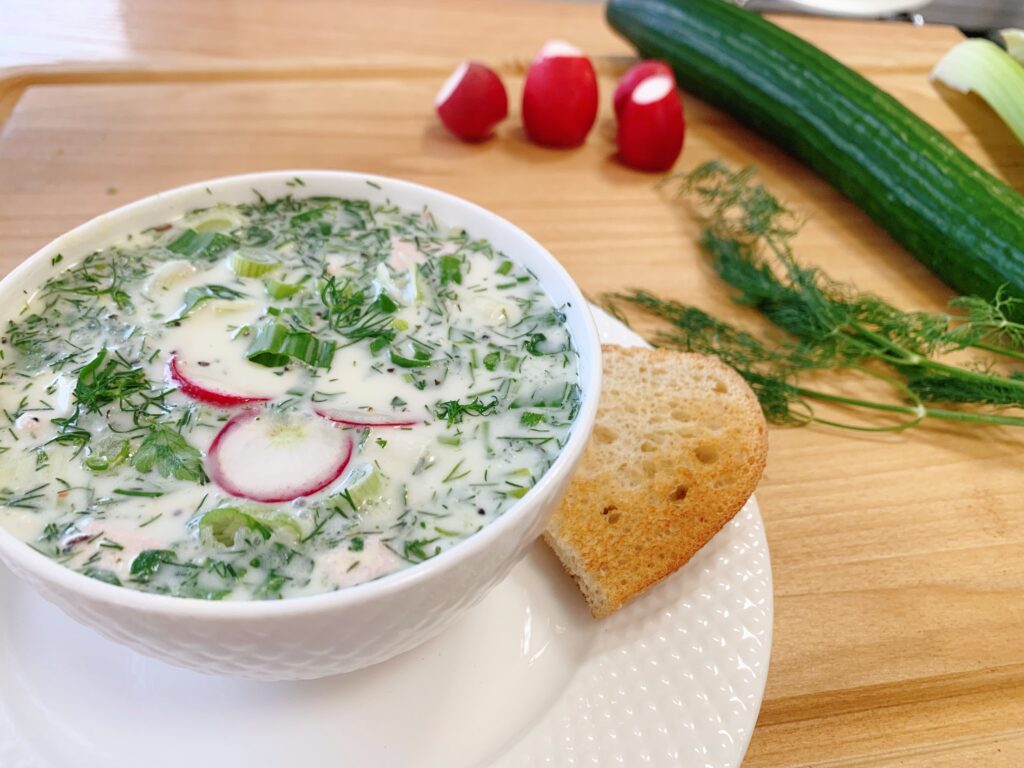
What is okroshka? The honest answer is: a cold soup made with kvass, diced vegetables, hard-boiled eggs, and whatever cooked meat you have on hand.
That description does not do it any favors. Cold soup with fermented bread drink sounds like something you’d need to be gently convinced to try. The Russians have been eating it since the 1700s, which suggests the convincing doesn’t take long.
It’s one of those dishes that sounds strange, tastes refreshing, and makes complete sense the moment you eat it on a hot day.
What’s Actually In It
Okroshka is built around a few simple components.
The base is either kvass or kefir. Kvass is a lightly fermented drink made from bread, earthy and slightly tangy, with almost no alcohol. Kefir is a fermented milk drink with a tart, creamy consistency. Both are traditional. Both have passionate defenders across Russia. The debate between them is the kind that Russian grandmothers have been having for generations and nobody has settled yet.
Into that base goes a combination of finely diced vegetables: cucumbers, radishes, spring onions, and boiled potatoes are standard. Hard-boiled eggs, chopped small. Cooked meat or fish, usually something mild like boiled beef, chicken, or bologna. Fresh dill. A spoonful of sour cream stirred in at the end.
The name gives the method away. Okroshka comes from the Russian verb “kroshit,” meaning to crumble or chop finely. The soup is, at its core, a finely chopped salad served cold in a tangy liquid. That’s it. Simple, practical, and surprisingly satisfying.
Where It Came From
The earliest written record of okroshka appears in a Russian cookbook from 1790, but the dish almost certainly predates that. The most commonly told origin story traces it to the barge haulers who worked the Volga River, who needed something filling, cooling, and easy to prepare without a fire in summer heat.
Cold soup from leftover bread drink and whatever vegetables were on hand fits that need exactly. No cooking required. It uses up what’s available and keeps you cool and fed.
Okroshka became one of the defining dishes of the Russian summer table, served in homes across the country from June through August when the heat made anything warm feel like the wrong choice.
It spread with the same logic that made it popular in the first place: practical, refreshing, made from ingredients almost everyone had. By the Soviet era it was ubiquitous, appearing in canteens, home kitchens, and summer dachas across the entire country.
The Kvass Question
Kvass deserves its own moment here, because it’s central to understanding okroshka and to understanding Russian food culture more broadly.
Kvass is made by fermenting bread in water, usually rye bread, with a small amount of yeast and sugar. The result is a dark, slightly effervescent drink with a complex, slightly sour flavor that doesn’t translate easily to anything in the Western pantry. It’s not beer or kombucha. It’s its own thing.
In okroshka, kvass does two jobs at once. It provides the liquid base and it provides the flavor, the slight tartness that makes the soup taste like more than just cold vegetables in water. That tang is the whole point. Without it, okroshka is a different dish.
Alyonka imports kvass, which speaks to how seriously Elena takes the full picture of Russian food culture. It’s the kind of ingredient that doesn’t have a good substitute, so you either carry the real thing or you don’t carry it at all.
Why It Surprises People
The gap between how okroshka sounds and how it tastes is significant.
Cold soup is already a concept that takes some people a moment to accept. Cold soup with fermented bread drink in it requires a little more mental flexibility. And then you eat it on a warm afternoon when you’re not looking for anything heavy, and the combination of cold liquid, crisp vegetables, fresh dill, and tangy base does exactly what it’s supposed to do.
It’s the culinary equivalent of something you’d never order on a menu and then regret not ordering sooner.
The kvass version tends to be the one that surprises people most. The flavor is genuinely unlike anything in the typical American food vocabulary. The kefir version is easier to place, closer to something between a cold borscht and a thinned tzatziki. Both are worth trying if you have the chance.
Okroshka and Alyonka
Okroshka isn’t currently on Alyonka’s menu. But the tradition it comes from is woven through everything Elena serves.
The emphasis on seasonal, practical food with the use of fermented flavors as a foundation rather than an accent. The understanding that summer calls for something different than winter, and that Russian cuisine has always known the difference.
Elena grew up in Kazakhstan eating food shaped by the same logic okroshka represents: real ingredients, honest technique, and a deep respect for what food is actually supposed to do. Cool you down. Fill you up. Taste like someone made it with care.
The kvass she imports connects directly to that history. So does the borscht, the pickled vegetables, the salads built for sharing at a summer table.
Russian cuisine is not just cold-weather food for cold-weather people. Okroshka is proof of that, if you ever needed any.
If okroshka has you curious about what else Russian food has to offer, Alyonka’s menu is a good place to keep exploring. Alyonka is at 2870 W State St in Boise. Call 208-344-8996 to make a reservation.
Come in when it’s warm. Order the cold borscht. Ask Elena about the kvass, and let conversation begin.