Eastern European baking traditions have never been just about dessert.
In the villages and cities of Russia, Ukraine, Kazakhstan, and the countries surrounding them, the oven was the center of the home. It heated the room. It dried herbs. It baked the bread that fed the family through winter. And when there was something worth celebrating, or someone worth honoring, it produced the kind of food that took all day to make and disappeared in minutes.
Baking in Eastern Europe has always been how people said I love you. I’m grateful. You matter to me. The food was the message.
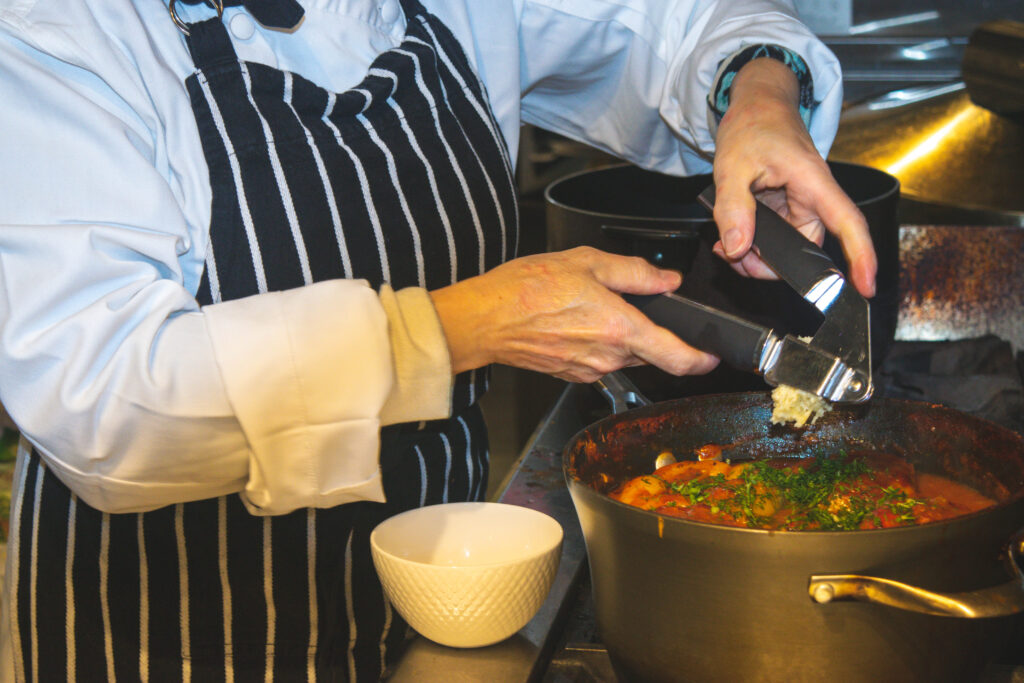
That tradition is alive in Elena’s kitchen at Alyonka. It shows up in every layer of the honey cake and every fold of the pirozhki dough. And most people who come in for dinner don’t even know it’s there.
The Oven as the Heart of the Home
Before modern heating, the large masonry ovens common across Russia and Central Asia did more than cook. They were the warmest place in the house, the place where bread rose and porridge simmered and children sat to stay warm on cold mornings.
The baking schedule followed the oven’s temperature. Bread went in first, at the highest heat. As the oven cooled through the day, different dishes took their turn. By evening, when the temperature had dropped to something gentler, the smaller pastries and sweets went in. Nothing was wasted.
This relationship between baker and oven produced a culture of patience and technique. You couldn’t rush the oven. You learned to work with it.
The Key Traditions
Eastern European baking spans an enormous range of recipes, but a few traditions appear across nearly every culture in the region.
Pirozhki. Hand-sized stuffed pastries, baked or fried, filled with ground beef, cabbage, potato, mushroom, or sweet fruit. Pirozhki have been part of Russian baking culture since at least the 15th century. They were street food before street food was a category. Portable, filling, made from whatever was on hand.
Medovik. Russian honey cake. Eight to ten paper-thin sponge layers, each rolled and baked separately, stacked with sour cream frosting, and left overnight to soften into each other. It’s one of the most labor-intensive desserts in the Eastern European canon, and the labor is the point. A medovik is not something you make casually. It’s something you make because someone deserves it.
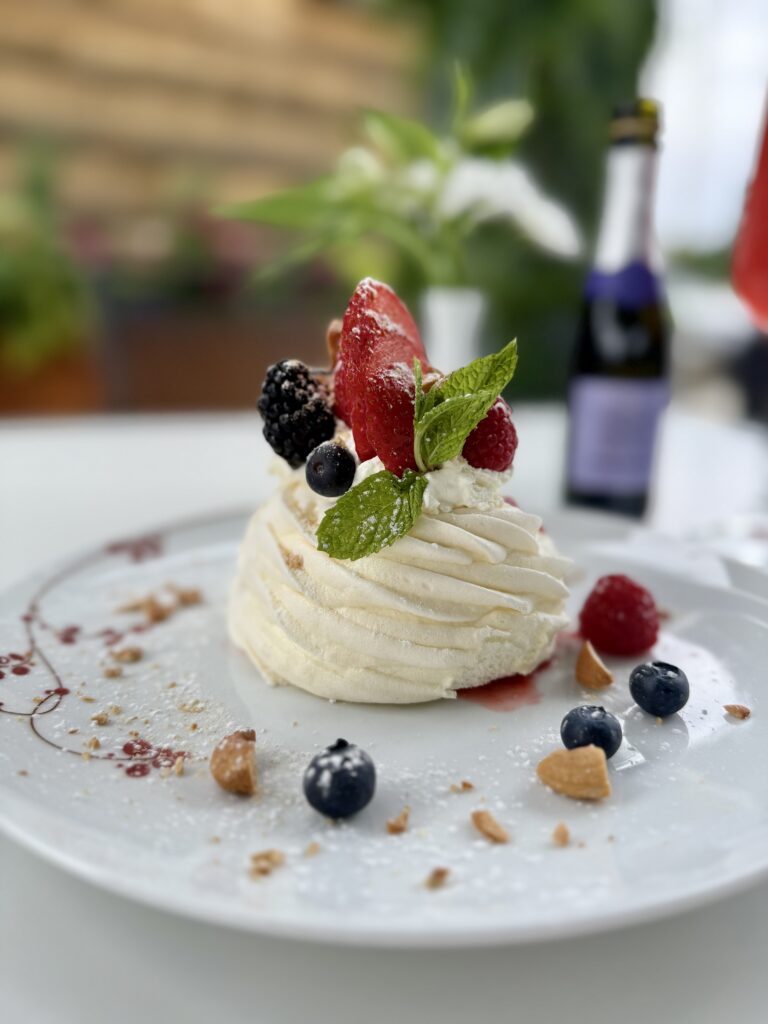
Pavlova. A meringue-based dessert with a crisp shell and a soft, marshmallow-like interior, topped with cream and fruit. Light enough to feel like a treat, substantial enough to be a real dessert. The technique is deceptively simple and very easy to get wrong.
Blini. Thin pancakes made from yeasted batter, served sweet or savory, stacked and filled or folded and eaten by hand. Blini appear at celebrations, at Maslenitsa (Pancake Week before Lent), and on everyday tables across Russia and Central Asia. They’re one of the oldest foods in the tradition.
Kulich. A tall, enriched Easter bread made with eggs, butter, raisins, and saffron, baked in a cylindrical mold and glazed on top. It’s the bread that comes out once a year, carried to church to be blessed, then brought home to break the Lenten fast. No other bread quite like it exists in the Western tradition.
What Soviet Scarcity Did to Baking
The Soviet era shaped Eastern European baking in ways that are still visible today.
When butter, sugar, and eggs were rationed or hard to find, bakers learned to stretch what they had. They relied on technique where ingredients fell short. They discovered that sour cream could replace cream, that honey could substitute for sugar, that the right timing and method could produce something rich and satisfying without the full measure of fat and sweetness a Western recipe might call for.
The result was a baking tradition built on resourcefulness. Recipes that look simple on paper but require precision to execute. Techniques passed down by watching and doing, not by measuring.
When you couldn’t buy your way to a good result, you learned your way there. That’s the foundation a lot of Eastern European baking sits on.
How Elena Learned to Bake
Elena DeYoung grew up in Almaty, Kazakhstan, in a kitchen where recipes weren’t written down. Her grandmother baked by memory, by feel, by the look of the dough and the smell of the oven. Elena learned the same way.
She didn’t inherit a recipe box. She inherited a set of sensory memories: how the honey cake layers should look when they’re thin enough, how the pirozhki dough should feel before it goes in, what the pavlova should sound like when you tap the shell.
That’s a harder thing to learn than a recipe, and a more durable one.
City Cast Boise called Alyonka “a top-notch bakery whose dessert case is unfortunately overshadowed by the dinner menu.” It’s a fair observation. The dinner menu is exceptional. The desserts are something people who know about them plan their visit around.
Save Room for Dessert
Medovik honey cake. Ten hand-rolled layers, sour cream frosting, rested overnight. The real version of a dish most people have only encountered in a lesser form. Available by the slice or as a whole cake for special occasions.
Royal poppy seed ganache cake. A less familiar name, but one worth seeking out. Rich, layered, and the kind of dessert that makes the table go quiet for a moment.
Both are available at Alyonka, and both sell out. The dessert menu is worth reviewing before you visit so you know what to save room for.
Alyonka is at 2870 W State Street in Boise. Call 208-344-8996 to make a reservation and ask what’s available that day.
The pelmeni will fill you up. The honey cake is worth it anyway.
Order dessert before you think you need to. By the time you realize you want it, it may be gone.